
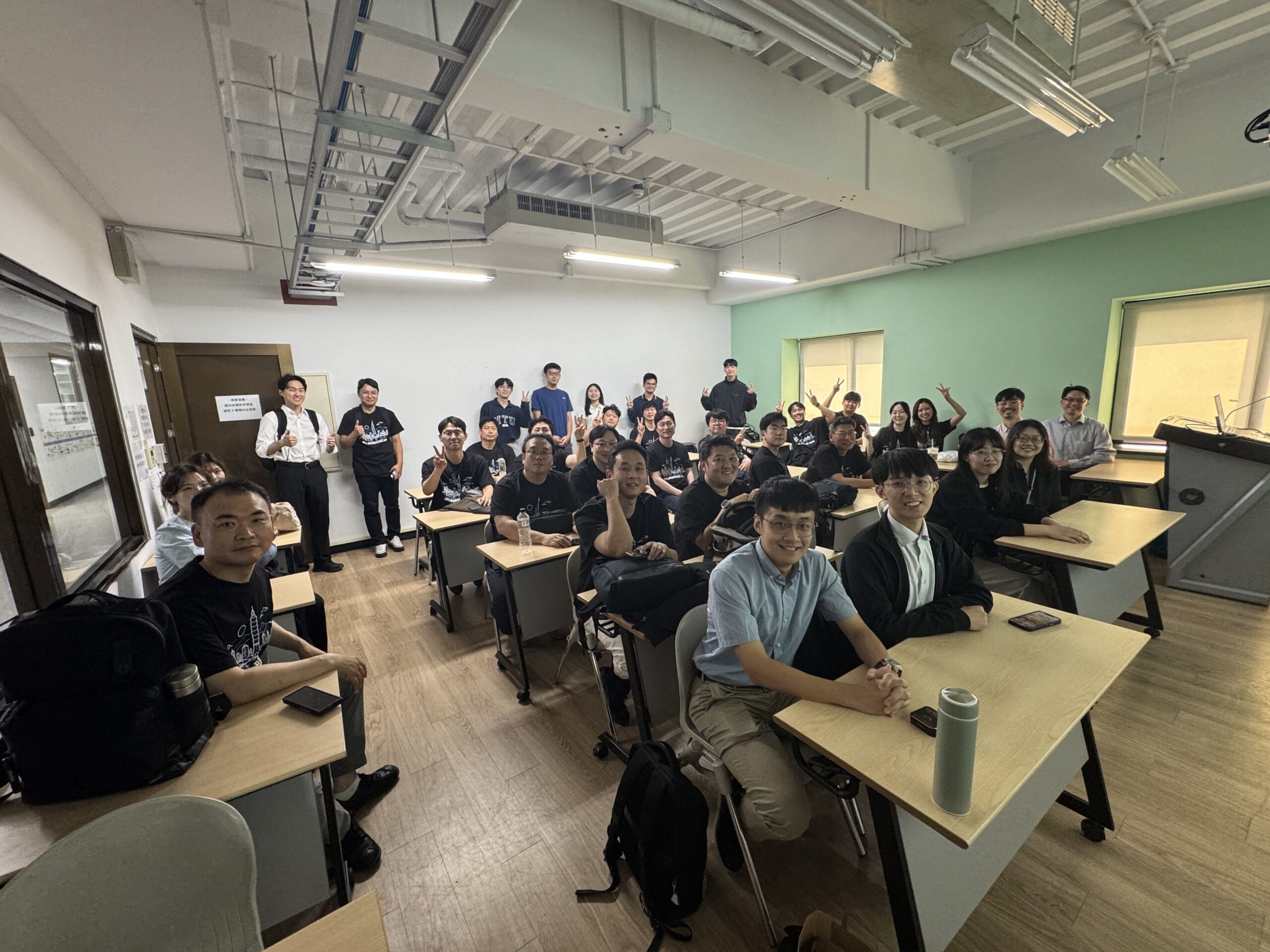
Our laboratory was pleased to welcome students from the Korea Advanced Institute of Science and Technology (KAIST) for an academic visit and research exchange. During the visit, our team presented three demonstrations highlighting our ongoing research in construction robotics, autonomous inspection, and digital construction monitoring. These demonstrations showcased how emerging technologies can improve efficiency, enhance construction quality, and promote safer working environments.
Autonomous UGV for Facility Inspection | Bryan Davis Tan (魏民權)
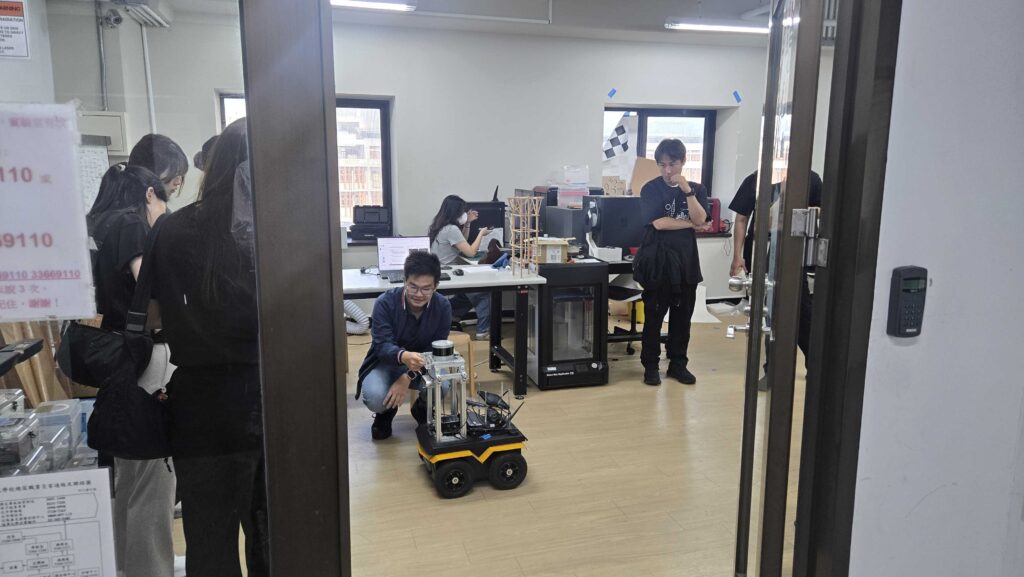
Bryan demonstrated the laboratory’s Clearpath Jackal Unmanned Ground Vehicle (UGV), equipped with multiple sensors for environmental perception and mapping. The platform is being developed to support autonomous inspection of large-scale and potentially hazardous facilities, reducing the need for personnel to enter unsafe environments.
Human–Robot Collaboration in Construction | Bo-Ye Wang (王柏燁) and Leon Lin (林暉祐)
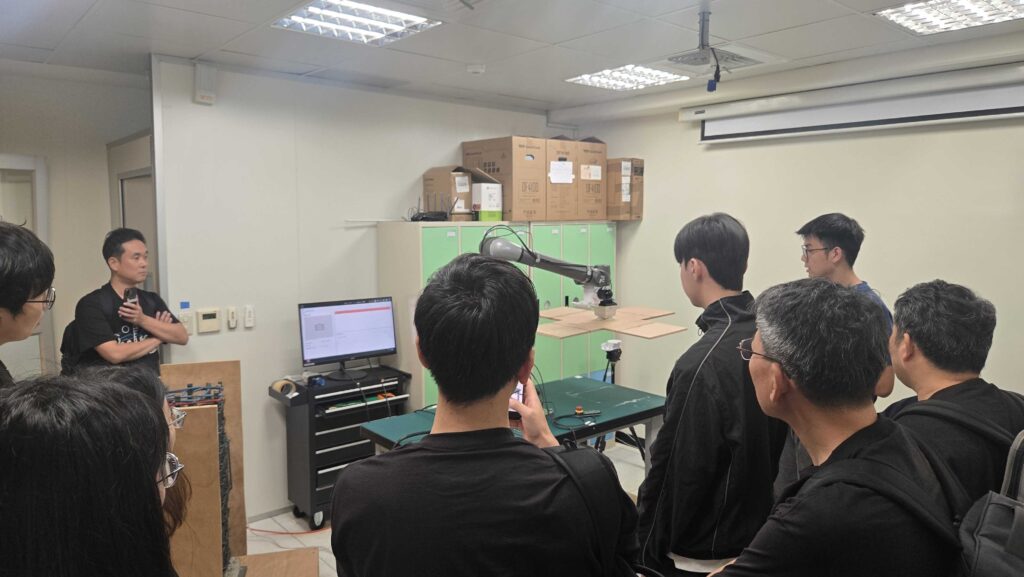
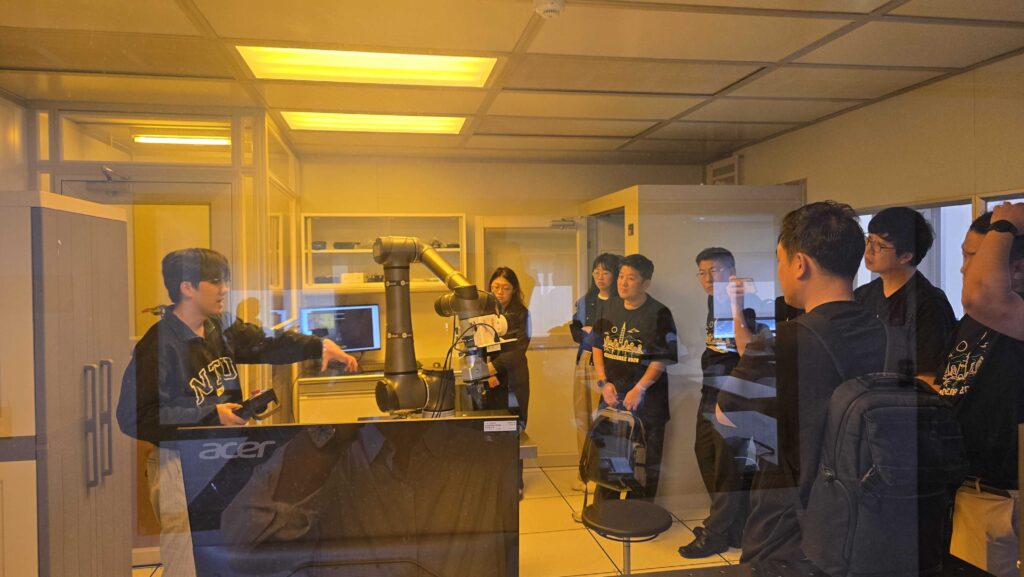
Bo-Ye and Leon demonstrated the potential of robotic arms to assist construction workers through human-robot collaboration. Bo-Ye focused on using robotic arms to support physically demanding tasks, particularly those involving heavy objects, while Leon explored robotic assistance for precision-oriented operations requiring accurate positioning and controlled movements. Their demonstrations highlighted our vision of combining robotic strength and precision with human expertise and adaptability to improve construction efficiency, quality, and worker safety.
Handheld Visual LiDAR and BIM-Based Construction Monitoring | Eric Huang (黃朝雍) and Crystaley Pradipta (陳晶圓)
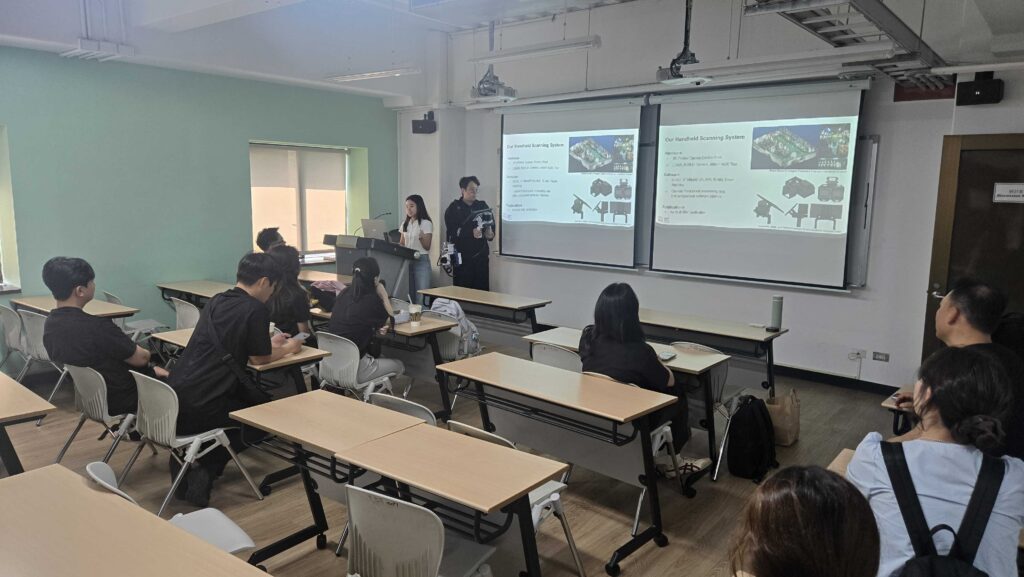
Eric and Crystaley demonstrated a handheld Visual LiDAR system integrated with a Building Information Modeling (BIM) comparison pipeline. The system enables the capture of real-world spatial information and its comparison against digital building models, supporting construction progress monitoring and verification. This line of project integrates reality capture technologies with BIM to identify discrepancies between as-built conditions and design information, improving the efficiency and accuracy of construction monitoring.
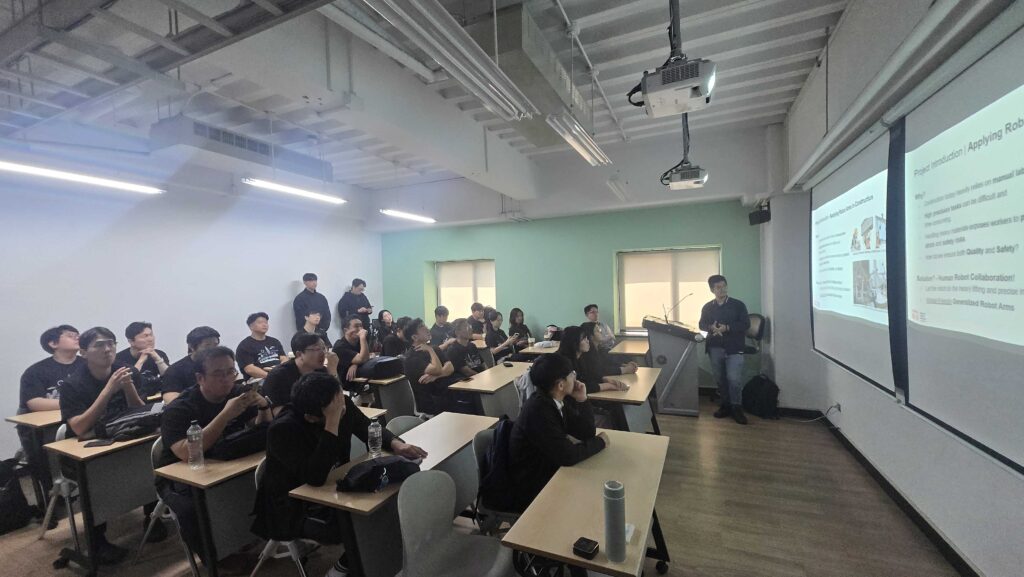
The visit provided a valuable opportunity for knowledge exchange and discussions on the future of robotics and digital technologies in the construction industry. Through these demonstrations, our laboratory shared its vision of integrating autonomous systems, human-robot collaboration, and BIM-based monitoring to advance safer, smarter, and more efficient construction practices.